Health considerations
Bloat
Larger breeds typically have a higher chance of suffering from bloat. This is when the stomach twists and cuts off blood supply, this is very serious and can be deadly to dogs if not treated in time. To help prevent it, it’s recommended that exercise is limited around meal time and instead of feeding one large meal a day they suggest you split it up into multiple smaller meals.
Signs of bloat
-Rapid breathing and painting
-Behavioural signs that indicate dog is anxious: restless, pacing
-Abdomen larger than usual, swollen and painful
-Nausea as indicated by retching without vomiting
Joint problems
Being quite a large breed they tend to experience problems with their joints and bones as they have to support a lot of weight. Some of these include hip dysplasia and osteoarthritis. To help this, they can be provided with joint supplements such as glucosamine. Another concern is osteochondritis dissecans (OCD), this is a condition that affects the cartilage in the joints. This condition causes a flap of cartilage to form in the joint which can cause a painful inflammatory response. Typically to manage this condition your puppy will be put on pain meds and will probably have exercise restrictions. If your puppy is six months old or older they will most likely need surgery to help.
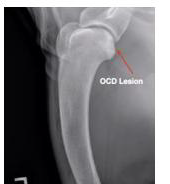
Example of OCD Lesion from Veterinary Partner Journal
Heart Problems
Previous research has been done to suggest that Great Danes have the potential for heart issues associated with compromised right ventricular function. This can have detrimental systemic effects on a dog’s overall health. Symptoms include shortness of breath and swelling among others. Early screening for any murmurs and signs of cardiac problems should be performed by a veterinarian in early life stages and as part of a yearly routine health check.